Decoding the hidden conversations of plants, animals & microbes
The Animal Plant Interaction Lab at Sri Venkateswara College, University of Delhi, explores plant-animal-microbe interactions and their role in food, health, agriculture and a sustainable environment.
Have a question? Our AI assistant answers instantly - tap the sparkle button at the bottom right.
Latest News & Notices
Announcements, internships and downloads- 07 Nov 2026 Call for Winter Internship (December 2026) - applications open NEW PDF
- 05 Nov 2026 Guidelines for internship applicants (format, documents and timeline) NEW PDF
- 01 Nov 2026 Lab featured in The Microbiologist: "Unraveling the secret microbial power within medicinal plants" NEW
- 23 Oct 2026 Cover page article: Pharmacological potential of ants (Hymenoptera: Formicidae) and their symbionts
- 17 Oct 2026 Lab safety and biosafety SOP - updated circular PDF
- 08 Oct 2026 Seminar: Plant-microbe-insect interactions and sustainable agriculture
About the API Lab
Since 2011 the API Lab has studied how plants, animals and microbes interact - and how these relationships shape food, health and the environment.
Plant immunity
Induced defences and secondary metabolites in crops such as Brassica juncea.
Microbial symbionts
Endophytes and endosymbionts from plant and animal sources.
Insect interactions
Herbivores, ants and parasitoids in multi-trophic systems.
Environment
Phytoremediation, air quality and urban plant-microbe ecology.
Our Achievements
Unraveling the secret microbial power within medicinal plants
Magazine feature on the lab's research into the microbial partners of medicinal plants.
Read articlePharmacological potential of ants (Hymenoptera: Formicidae) and their symbionts
Cover page article reviewing the pharmacological potential of ants and their microbial symbionts.
Our Recent Research
Peer-reviewed work from the lab on plants, insects and microbes.
Gut Bacterial Diversity and Putative Functional Roles in Red Weaver Ant (Oecophylla smaragdina)
Aboveground insect herbivory shapes plant–soil feedback and ecosystem resilience
Growth-Promoting Endophytes as Immunity Booster for Brassica juncea against Insect Attack
Identifying Bacteria from Urban Soil for Degrading Soil Organic Contaminants of Emerging Concern
Interplay of heavy metal accumulation, physiological responses, and microbiome dynamics in lichens: insights and future directions
Meet Our Core Members
Researchers driving the lab's work on plant-animal-microbe interactions.
Equipment & Facilities
State-of-the-art instruments and research infrastructure that power our work.

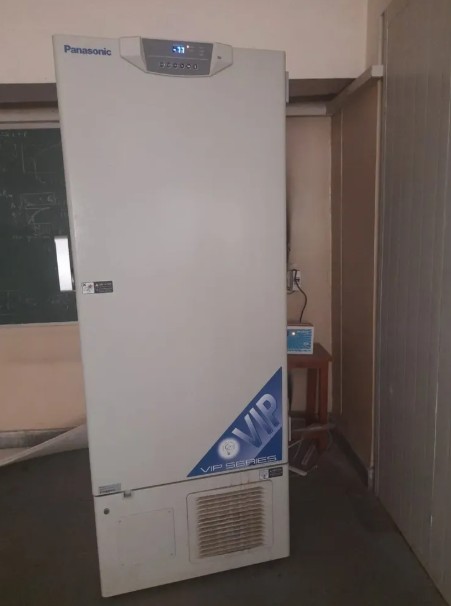
-80 °C Deep Freezer
Long-term storage of microbial cultures and biological samples.
Laboratory Fume Hood
Safe handling of volatile chemicals and solvents.
Shaker Incubator
Temperature-controlled growth of microbial cultures.
Dry Bath
Precise incubation of samples for molecular work.
MiniAmp Plus Thermal Cycler
PCR amplification for molecular identification of microbes.
Spectrophotometer
Quantitative biochemical and growth assays.
Carbon Dioxide Enrichment Facility
Open Top Chamber System funded by the Ministry of Environment, Forest and Climate Change (MoEFCC), India.
Photo Gallery
View galleryCall for Winter Internship (December 2026) is open. Contact us to apply now!
Collaborations, research queries and internship applications are welcome. Our team usually replies within a few days.